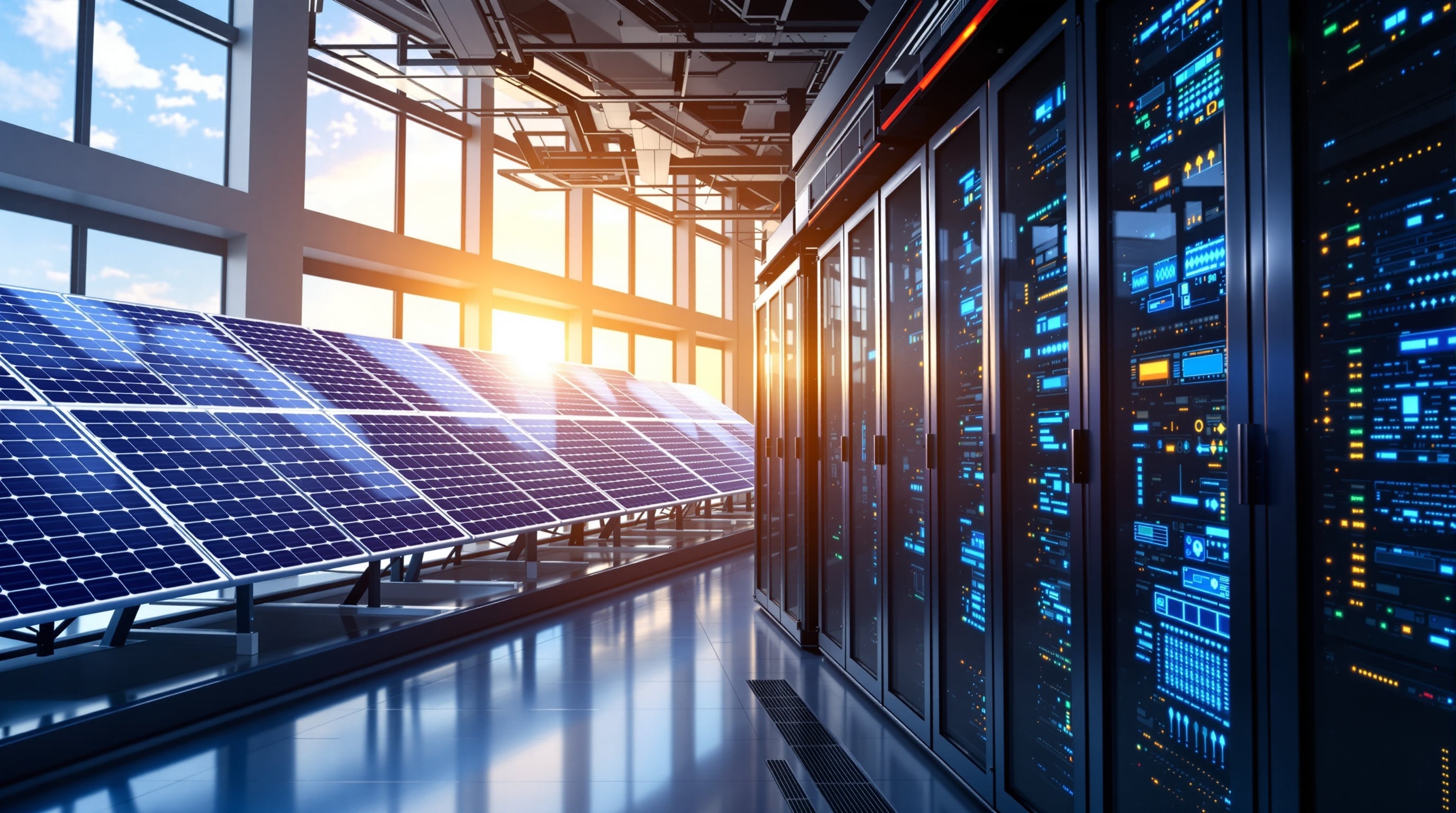
The artificial intelligence revolution has an unexpected consequence: energy consumption is skyrocketing far beyond what grid operators anticipated. A single AI query can use 10 times more electricity than a traditional Google search. Training large language models requires the energy equivalent of hundreds of American homes for an entire year. And the boom in AI data centers is straining electrical grids worldwide.
But this crisis is catalyzing an unexpected transformation. The tech industry's insatiable demand for reliable, 24/7 power is driving massive investments in clean energy, battery storage, nuclear power revival, and smart grid technology. In effect, AI's enormous energy appetite may be accelerating—rather than hindering—the transition away from fossil fuels.
🔑 Key Highlights
- AI and data center energy demand growing 20-30% annually, far exceeding predictions
- Tech companies becoming largest corporate buyers of renewable energy globally
- AI-optimized smart grids enabling efficient integration of variable renewable power
- Small modular nuclear reactors gaining traction for carbon-free 24/7 datacenter power
- Energy storage breakthroughs making renewables viable for constant AI workloads
The AI Energy Explosion Nobody Predicted
Just two years ago, energy forecasters underestimated AI's impact on electricity demand. The rapid adoption of AI across industries—from customer service chatbots to medical diagnosis to autonomous systems—has created energy needs that have caught utilities and grid operators off guard.
Consider the numbers:
- Data center electricity use: Projected to double between 2025-2028, reaching 3-4% of total global electricity consumption
- AI training: Training GPT-4 used an estimated 50 gigawatt-hours—enough to power 5,000 American homes for a year
- Query costs: ChatGPT uses approximately 2.9 watt-hours per query, versus 0.3 watt-hours for traditional search
- Corporate demand: Microsoft, Google, Amazon, and Meta alone are projected to consume more electricity than many countries by 2027
"We fundamentally underestimated how quickly AI would scale and how energy-intensive these models would be," admits Dr. Jennifer Park, energy economist at Stanford University. "This has created both a challenge and an opportunity for the energy transition."
The Clean Energy Acceleration
Faced with both massive energy needs and corporate sustainability commitments, tech giants are becoming the world's largest investors in renewable energy:
Record Renewable Energy Procurement
In 2025-2026, technology companies signed power purchase agreements (PPAs) for over 45 gigawatts of renewable energy—more than the entire installed solar capacity of many European countries. Key developments include:
- Microsoft: Committed to 20GW of new renewable energy by 2030, including massive solar farms and offshore wind projects
- Google: Pioneered "hourly matching" of clean energy to consumption, ensuring every hour of operation is matched with clean power
- Amazon: Now the world's largest corporate buyer of renewable energy, with 500+ solar and wind projects
- Meta: Achieving 100% renewable energy for all data centers, driving innovation in grid-scale batteries
These commitments are accelerating renewable energy deployment at unprecedented scale. Solar and wind developers report that tech company demand is driving project pipelines years ahead of schedule.
The Storage Solution
The challenge: solar and wind are variable, but AI data centers need constant, reliable power. The solution driving massive innovation: energy storage.
Breakthroughs in 2025-2026 include:
- Flow batteries: Long-duration storage (10-24 hours) becoming commercially viable for grid-scale deployment
- Thermal storage: Storing excess renewable energy as heat in molten salt or other materials
- Hydrogen: Using excess wind/solar to produce green hydrogen for later electricity generation
- Next-gen lithium batteries: Improved energy density and declining costs making 4-8 hour storage economical
"Storage is the missing piece that makes renewables work for AI's always-on demands," explains battery researcher Dr. Amanda Chen. "Tech company investments are accelerating storage technology development by 5-10 years."
AI-Optimized Smart Grids
Ironically, the same AI technology consuming vast energy is also enabling smarter, more efficient grids that can handle variable renewable power:
Predictive Load Management
AI systems can now:
- Predict renewable energy generation hours or days in advance with 95%+ accuracy
- Automatically shift flexible computing loads to times when clean energy is abundant
- Balance grid supply and demand in real-time across thousands of generation and consumption points
- Optimize battery charging/discharging to smooth renewable intermittency
Autonomous Distributed Energy Systems
Smart algorithms are managing distributed energy resources—rooftop solar, EV chargers, heat pumps, battery systems—as coordinated "virtual power plants" that can:
- Reduce peak demand on traditional power plants
- Provide grid stability services
- Enable higher penetration of renewable energy without reliability issues
- Lower electricity costs for consumers through optimized usage
"AI is both the problem and the solution. It's consuming enormous energy, but it's also making it possible to run grids with 70-80% renewable energy—something that was considered impossible just a decade ago." - JPMorgan Energy Analyst
The Nuclear Renaissance
For carbon-free power that runs 24/7 regardless of weather, nuclear energy is experiencing a dramatic revival—driven largely by data center demand:
Small Modular Reactors (SMRs)
Unlike traditional nuclear plants that take 10+ years to build, SMRs are:
- Factory-built and truck-delivered to sites
- Smaller scale (50-300 megawatts vs. 1,000+ for conventional reactors)
- Inherently safer designs with passive safety systems
- Potentially deployable in 3-5 years
- Ideally sized for large data center campuses
Several tech companies have announced partnerships with SMR developers:
- Microsoft: Signed agreement for SMR power at upcoming datacenter sites
- Google: Investing in fusion energy startups alongside SMR projects
- Oracle: Announced plans for nuclear-powered cloud data centers
"Nuclear provides the carbon-free baseload power that renewables plus storage can't yet economically deliver at scale," explains nuclear engineer Dr. Robert Martinez. "SMRs make nuclear viable for industrial customers in ways traditional reactors never could."
Nuclear Fusion Progress
While still years from commercial viability, fusion energy—which promises limitless clean power with minimal waste—is attracting significant tech industry investment. Several companies report 2030s timeline for commercial fusion plants, accelerated by tech industry funding and partnerships.
Energy Efficiency Innovations
While investing in clean power generation, tech companies are simultaneously working to reduce AI's energy intensity:
Hardware Optimization
- Specialized AI chips: New processors designed specifically for AI workloads use 50-70% less energy than general-purpose chips
- Neuromorphic computing: Brain-inspired chips that could reduce AI energy needs by 1000x (still in research phase)
- Photonic processors: Using light instead of electricity for computing, dramatically reducing heat and energy
Data Center Cooling Innovations
Cooling consumes 30-40% of data center energy. Innovations include:
- Liquid cooling: Direct-to-chip cooling systems far more efficient than air conditioning
- Free cooling: Locating data centers in cold climates to use outside air
- Waste heat recovery: Capturing data center heat to warm nearby buildings or greenhouses
- Zero-water cooling: Systems that eliminate water consumption, critical in drought-prone regions
Software Efficiency
- Model optimization: Smaller, more efficient AI models that maintain performance with less computation
- Carbon-aware computing: Automatically scheduling non-urgent workloads for times when clean energy is abundant
- Workload consolidation: Better server utilization reducing total hardware needs
The Economic Impact
The AI-driven energy transformation is creating massive economic opportunities:
Job Creation
- Solar and wind installation jobs growing 25% annually
- Grid modernization creating high-skill electrical engineering positions
- Battery manufacturing becoming major industrial sector
- Energy management and optimization roles proliferating
Investment Flows
Estimated $2+ trillion in energy infrastructure investment through 2030, including:
- Renewable energy generation facilities
- Grid upgrades and expansion
- Energy storage deployment
- Nuclear power development
- Transmission infrastructure
Cost Trends
Paradoxically, while energy consumption is rising, costs are falling:
- Solar and wind now cheapest electricity sources in most markets
- Battery costs declining 15-20% annually
- Grid efficiency improvements reducing transmission losses
- Competition driving innovation and price reductions
Policy and Regulatory Challenges
The rapid transformation is creating policy challenges:
- Grid capacity: Utilities struggling to approve and connect new renewable projects fast enough
- Permitting delays: Transmission line and renewable project approvals taking years
- Rate design: Electricity pricing structures designed for different era not optimized for current needs
- Environmental reviews: Even clean energy projects face lengthy approval processes
Advocates are pushing for streamlined permitting while maintaining environmental protections, recognizing that delays in clean energy deployment force continued reliance on fossil fuels.
The Consumer Impact
For average consumers, the AI energy transformation has mixed effects:
Potential Benefits
- Lower long-term electricity costs as cheap renewables displace expensive fossil fuels
- More reliable grids with better outage prevention
- Access to home energy management systems that optimize usage and reduce bills
- Potential bill credits for participating in demand response programs
Potential Challenges
- Short-term rate increases to fund infrastructure upgrades
- Competition for electricity in regions with limited capacity
- Complexity of new rate structures and pricing options
Climate Implications
The ultimate question: Will AI's energy demands help or hinder climate goals?
Current trajectory suggests cautious optimism:
- If powered by renewables: AI could actually accelerate decarbonization by driving clean energy deployment and enabling smarter grids
- If powered by fossil fuels: AI could significantly increase emissions and derail climate progress
The choice being made now—between building new gas plants to power AI or investing in clean alternatives—will determine which path we follow.
"The next 3-5 years are critical," warns climate policy expert Dr. Sarah Johnson. "We're building massive new energy infrastructure to power AI. If we build it clean, we accelerate the energy transition. If we build it dirty, we lock in decades of emissions. There's no neutral option."
Looking Ahead: 2030 Energy Landscape
If current trends continue, the 2030 energy landscape could look radically different:
- 50-70% of grid electricity from renewables in developed economies
- AI managing power flows across continental grids in real-time
- First commercial fusion plants beginning operation
- Data centers acting as grid stabilizers through flexible demand
- Energy storage as common as gas power plants are today
- Transportation, heating, and industry increasingly electrified
The irony is profound: the technology that seemed poised to worsen climate change may instead catalyze the clean energy revolution necessary to address it. AI's enormous appetite for electricity is forcing solutions that benefit everyone—if we make the right choices now.